

Working Principle and Characteristics of Pneumatic Conveying for Resin Powder Materials
HeadPowder, a leading provider in the field of material handling solutions, specializes in pneumatic conveying systems designed specifically for resin powders. These systems are engineered to efficiently transport resin powders from storage to processing units, ensuring optimal performance and reliability in industrial applications.

Understanding Pneumatic Conveying Systems for Resin Powders
Pneumatic conveying systems utilize air or gas as the primary medium to transport solid materials like resin powders through a network of pipes. The technology is widely adopted in industries dealing with fine powders due to its ability to handle delicate materials without causing degradation or contamination. The core of these systems lies in the interaction between the material particles and the air flow, which dictates the efficiency and effectiveness of the conveying process.
The Working Principle of Resin Powder Pneumatic Conveying
At the heart of resin powder pneumatic conveying is the principle of air flow and particle suspension. The system typically operates by creating a pressure differential or using a vacuum to draw resin powder from a hopper or storage container into the conveying line. As air is introduced at high velocity, it lifts and transports the resin particles through the pipeline. The process can be categorized into two main types: pressure (or positive pressure) systems and vacuum (or negative pressure) systems.
In pressure systems, compressed air is used to push the resin powder through the pipeline from a central source, often a blower or compressor. This method is suitable for long-distance or high-volume conveying tasks, as it can maintain consistent flow rates and handle abrasive or sticky powders. Conversely, vacuum systems use a vacuum pump to create a negative pressure that pulls the resin powder from the source into the conveying line. This approach is ideal for applications requiring gentle handling of sensitive materials, as it minimizes particle breakage and reduces the risk of dust accumulation.

Key Characteristics of Resin Powder Pneumatic Conveying Systems
Resin powder pneumatic conveying systems exhibit several distinct characteristics that make them advantageous for industrial use. Firstly, they offer a high degree of flexibility in terms of layout and integration with existing production lines. The modular design allows for easy expansion or reconfiguration without major structural changes. Secondly, these systems provide clean and dust-free operation, which is crucial for maintaining product quality and adhering to environmental regulations. Unlike mechanical conveying methods, such as screw conveyors or belt conveyors, pneumatic systems do not introduce additional friction or contamination, preserving the integrity of the resin powder.
Another notable characteristic is the energy efficiency of modern pneumatic conveying solutions. Advanced blower technologies and optimized air flow designs reduce energy consumption while maintaining or improving conveying performance. This not only lowers operational costs but also aligns with sustainability goals in industrial operations. Furthermore, the systems are compact and space-saving, as they eliminate the need for large storage silos or extensive floor space typically required by other material handling methods. This makes them particularly suitable for facilities with limited space or where space optimization is a priority.
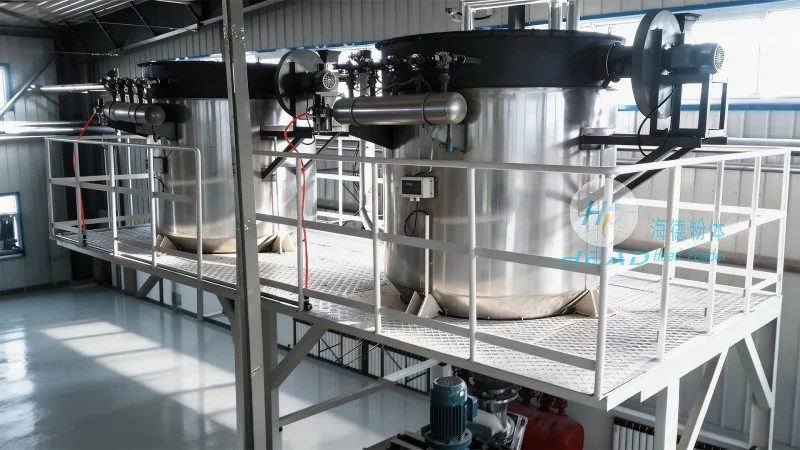
Applications and Benefits in Industrial Settings
The application of resin powder pneumatic conveying systems spans across various industries, including plastics manufacturing, pharmaceuticals, and food processing. In the plastics industry, for instance, these systems are essential for transporting resin powders from storage to extrusion or molding machines, ensuring a continuous and uninterrupted production flow. The benefits extend to improved product consistency, reduced downtime, and enhanced safety in the workplace. By eliminating manual handling of resin powders, the systems minimize the risk of dust exposure and improve overall workplace safety.
Additionally, the systems contribute to environmental sustainability by reducing waste and improving material recovery rates. The enclosed nature of the conveying process prevents material loss and minimizes the impact on the environment. This aligns with the growing emphasis on eco-friendly practices in industrial operations, making pneumatic conveying an attractive choice for companies committed to sustainable development.
Conclusion
Resin powder pneumatic conveying systems, as offered by Shandong HeadPowder Engineering Co., Ltd., represent a sophisticated and efficient solution for material handling in modern industrial settings. By leveraging the principles of air flow and particle suspension, these systems provide reliable, clean, and flexible transportation of resin powders. The characteristics of high efficiency, low maintenance, and space-saving design make them a preferred choice for industries seeking to optimize their production processes while maintaining product quality and safety standards. With a focus on innovation and customer-centric solutions, HeadPowder continues to advance the technology of pneumatic conveying, meeting the evolving needs of industries worldwide.