

Introduction to Large-Scale Pneumatic Conveying System Equipment and Structural Principles
Shandong HeadPowder Engineering Co., Ltd., commonly known as headpowder, is a professional manufacturer and supplier specializing in large-scale pneumatic conveying systems. The company is headquartered in Shandong, China, and has established a solid reputation in the industry for its advanced technology and reliable equipment. With years of experience in the field, headpowder focuses on providing efficient and durable solutions for material handling in various industrial applications.

Overview of Large-Scale Pneumatic Conveying Systems
Large-scale pneumatic conveying systems are essential equipment used in industries such as food, pharmaceuticals, chemicals, and mining. These systems utilize air or other gases to transport bulk materials over long distances with high efficiency. The primary advantage of pneumatic conveying is its ability to handle a wide range of materials, including powders, granules, and fine particles, while maintaining cleanliness and preventing contamination. This technology is particularly valuable in applications where traditional mechanical conveyors may not be suitable due to material properties or operational constraints.
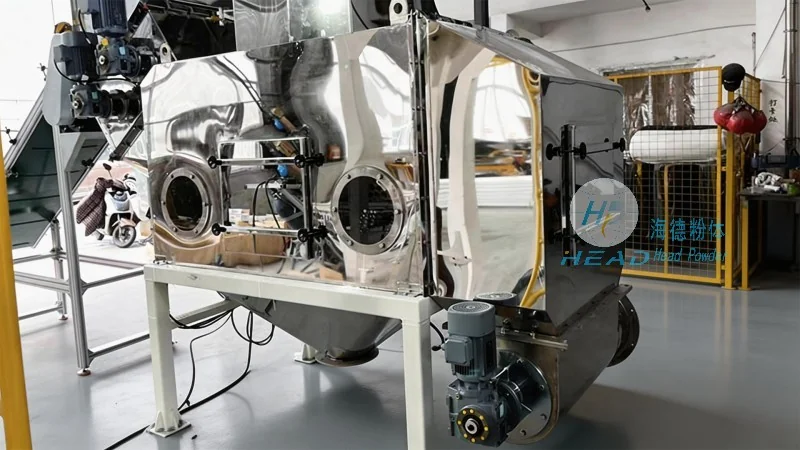
Structural Principles of Pneumatic Conveying Systems
The core components of a large-scale pneumatic conveying system include the material feeding unit, conveying pipeline, air source system, and material separation and collection equipment. The feeding unit, often a rotary valve or a pressure feeder, ensures a consistent and controlled flow of material into the system. The conveying pipeline, typically made of stainless steel or other corrosion-resistant materials, is designed to withstand the pressure and flow of air and material. The air source system, which may consist of a blower or a compressor, provides the necessary pressure and volume of air to move the material through the pipeline. The separation and collection equipment, such as cyclone separators or bag filters, are crucial for removing the material from the air stream and returning it to the process or storage.

Key Functional Components and Their Roles
Each component of the pneumatic conveying system plays a critical role in ensuring optimal performance. The material feeding unit is responsible for accurately metering the material and introducing it into the pipeline without causing blockages or uneven flow. The conveying pipeline must be properly sized and configured to maintain the desired air velocity and pressure, which directly impacts the system's capacity and efficiency. The air source system must provide sufficient air volume and pressure to overcome the resistance of the pipeline and the material being conveyed. The separation and collection equipment is essential for maintaining the purity of the material and preventing dust emissions, which is critical in industries with strict environmental regulations.
Advantages of Large-Scale Pneumatic Conveying Systems
Large-scale pneumatic conveying systems offer several advantages over traditional mechanical conveyors. First, they are highly flexible and can be easily adapted to different material types and process requirements. Second, they provide a clean and hygienic method of material handling, which is essential in industries such as food and pharmaceuticals. Third, these systems can handle materials over long distances with minimal maintenance and downtime. Fourth, they are capable of handling materials with varying particle sizes and moisture content, making them suitable for a wide range of applications. Additionally, pneumatic conveying systems can be integrated with other process equipment, such as mixers and dryers, to create a comprehensive material handling solution.

Application Examples and Industry Impact
Large-scale pneumatic conveying systems are widely used in various industries. In the food industry, they are used to transport ingredients such as flour, sugar, and spices from storage to production lines. In the pharmaceutical industry, they are used to handle active pharmaceutical ingredients (APIs) and other sensitive materials, ensuring that the materials remain pure and free from contamination. In the chemical industry, they are used to transport powders and granules, such as fertilizers and pigments, from production facilities to storage or distribution centers. In the mining industry, they are used to transport ore and other minerals from mining sites to processing plants. The efficiency and reliability of these systems have significantly improved production processes and reduced operational costs in these industries.