

Working Principle and Features of Rubber Granule Pneumatic Conveying System Equipment
HeadPowder, a leading manufacturer in the field of material handling solutions, specializes in the design and production of pneumatic conveying systems tailored for rubber granules. With a strong presence in Shandong, China, the company has established itself as a reliable partner for industries requiring efficient and reliable material transport. This article delves into the working principle and key features of their rubber granule pneumatic conveying system equipment, providing a comprehensive overview for potential clients and industry professionals.
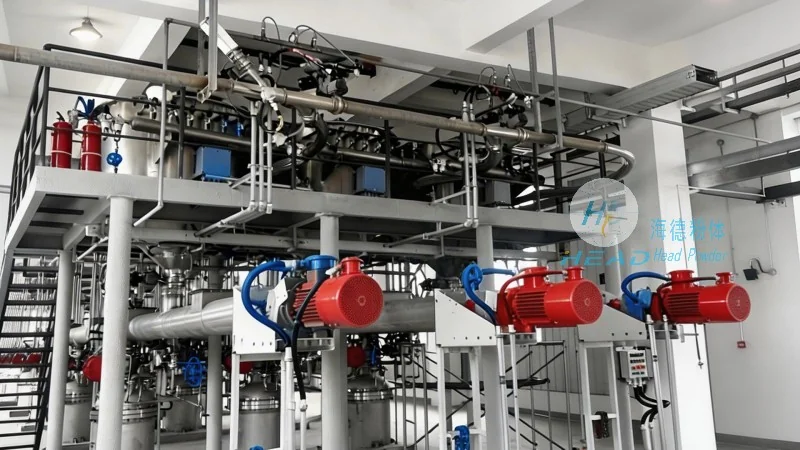
Understanding the Working Principle of Rubber Granule Pneumatic Conveying Systems
The rubber granule pneumatic conveying system operates on the fundamental principle of transporting bulk materials through a pressurized or vacuumed air stream. In this system, rubber granules are introduced into a hopper or feeding device, where they are then drawn into a pipeline by the moving air. The system typically utilizes either positive pressure or negative pressure (or a combination of both) to move the material from the source to the destination. The process involves several critical components, including a feeder, a conveyor line, and a discharge unit, all working in tandem to ensure smooth and continuous material flow.
For rubber granules, the system is engineered to handle the specific properties of the material, such as its density, size, and abrasiveness. The air flow is carefully controlled to prevent material degradation or blockages, ensuring that the rubber granules are conveyed without damage. The system may also incorporate features like cyclones or filters to separate the air from the material at the discharge point, maintaining a clean and efficient operation.

Key Features of the Rubber Granule Pneumatic Conveying System Equipment
HeadPowder's rubber granule pneumatic conveying system equipment is designed with several distinct features that enhance its performance and reliability. One of the primary advantages is its high efficiency in material transport, capable of moving large volumes of rubber granules over considerable distances with minimal energy consumption. The system is also highly flexible, allowing for easy integration into existing production lines or new setups, and can be customized to meet specific operational requirements.
Another notable feature is the system's ability to handle abrasive materials like rubber granules without causing wear and tear on the equipment. The components, such as the pipelines and valves, are constructed from durable materials that resist corrosion and abrasion, ensuring a long service life. Additionally, the system offers excellent control over the material flow, with adjustable air pressure and flow rates that allow operators to manage the conveying process precisely, reducing the risk of overloading or system failures.

The equipment also emphasizes safety and environmental compliance. The design incorporates features to minimize dust emissions and ensure proper ventilation, adhering to industrial safety standards. The system's compact and modular design makes it suitable for various industrial applications, from small-scale operations to large-scale manufacturing facilities. Furthermore, the system is equipped with monitoring and control systems that provide real-time data on the conveying process, enabling proactive maintenance and optimizing operational efficiency.
Conclusion and Company Information
HeadPowder Engineering Co., Ltd., based in Shandong, China, offers advanced rubber granule pneumatic conveying system equipment that combines efficiency, reliability, and durability. The working principle, centered on air-based transport, ensures effective movement of rubber granules while the key features, including high efficiency, material handling capabilities, and safety measures, make it an ideal solution for industries dealing with rubber granules. By leveraging the expertise and technology of HeadPowder, clients can achieve seamless material transport, reduced operational costs, and enhanced productivity in their production processes.