

Principle and Working Scene Characteristics of Fluorspar Powder Pneumatic Conveying Equipment
Fluorspar, a critical mineral widely utilized in industries such as metallurgy, glass manufacturing, and chemical production, requires efficient and reliable handling methods for its transportation. Pneumatic conveying systems have emerged as a preferred solution for moving fluorspar powder due to their ability to handle fine particles with minimal dust generation and high operational efficiency. This article provides an in-depth exploration of the fundamental principles of fluorspar powder pneumatic conveying equipment, examining how these systems operate and the specific characteristics of their working environments. The focus is on understanding the technology's role in enhancing industrial productivity while maintaining material quality and operational safety. The content is provided by Shandong HeadPowder Engineering Co., Ltd., a professional manufacturer based in China.
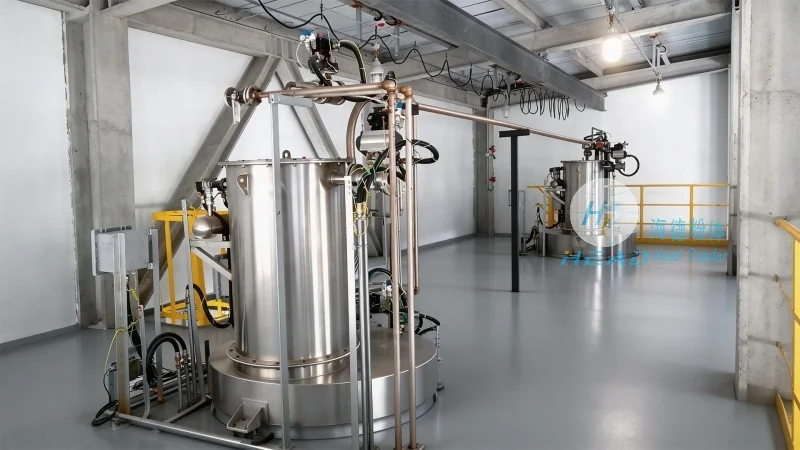


The Working Principle of Pneumatic Conveying Systems for Fluorspar Powder
The core mechanism of fluorspar powder pneumatic conveying equipment involves transporting bulk materials through a pressurized or vacuum air stream. The system comprises several essential components, including a feeding device, a conveying pipeline, a separation unit, and a discharge outlet. The process initiates with the fluorspar powder being fed into the system, where it is mixed with air under controlled pressure. As the air flows through the pipeline, it carries the powder particles, ensuring a uniform and continuous transport. The separation unit then separates the powder from the air, allowing the powder to be discharged at the destination while the air is either recirculated or vented. This closed-loop or open-loop system is designed to minimize environmental impact and ensure operational safety, making it suitable for handling fine, abrasive materials like fluorspar.
Key Working Scene Characteristics of Fluorspar Powder Pneumatic Conveying Equipment
The working scene characteristics of these systems are tailored to meet the specific demands of industrial applications. One primary characteristic is the system's ability to handle fine and abrasive powders without particle degradation. The equipment is engineered to maintain the quality of fluorspar during transport, which is crucial for downstream processes such as glass melting or chemical synthesis. Another key aspect is the working environment's dust management, as fluorspar powder can generate significant airborne particles. Robust dust control measures, including advanced filtration systems and sealed enclosures, are integrated into the design to comply with environmental regulations and protect personnel. The operational flexibility of the equipment is also a notable characteristic, as it can be adapted to different production scales and material flow rates, from small-scale laboratory use to large-scale industrial operations. Additionally, the system's energy efficiency is emphasized, with modern designs incorporating variable speed drives and optimized air flow to reduce energy consumption while maintaining performance.