

Operation Process and Working Principle of Pneumatic Conveying for Glass Raw Materials
HeadPowder, a leading engineering company based in Shandong, China, specializes in the design, manufacturing, and installation of pneumatic conveying systems tailored for glass raw materials. This article delves into the operational process and underlying principles of such systems, providing a comprehensive overview for industry professionals and potential clients.

Understanding Pneumatic Conveying Systems for Glass Raw Materials
Pneumatic conveying is a critical technology in the glass manufacturing industry, enabling the efficient and safe transport of raw materials like sand, soda ash, limestone, and other additives from storage silos to processing lines. The system operates by using air or gas as the conveying medium, creating a pressure differential that propels the material through a network of pipes. This method offers advantages over traditional mechanical conveyors, including reduced maintenance, lower energy consumption, and enhanced safety by eliminating the need for moving parts in the material path.
The Core Components and Their Functions
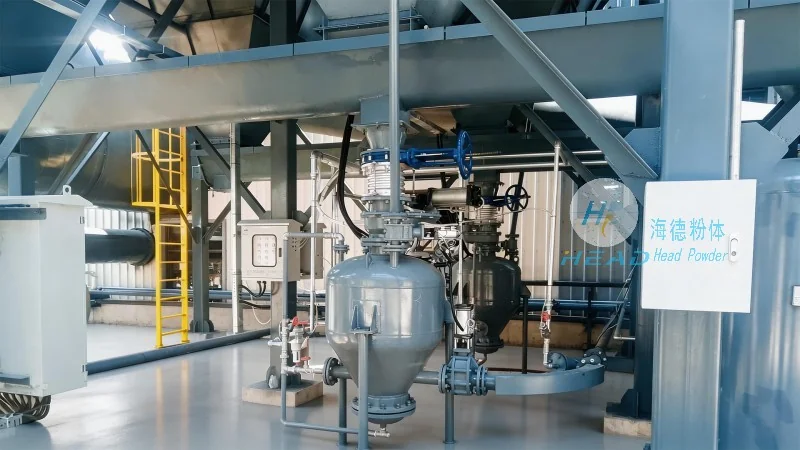
A typical pneumatic conveying system for glass raw materials consists of several key components, each playing a vital role in the overall operation. The main elements include the material hopper or silo, a feeder (often a rotary valve or screw feeder) to control the flow rate, a conveying line (made of stainless steel or other corrosion-resistant materials to withstand the abrasive nature of glass powders), a pressure vessel or receiver to collect the material at the destination, and a fan or blower to generate the necessary air pressure. The feeder is crucial as it ensures a consistent and controlled discharge of material, preventing blockages and maintaining system efficiency. The conveying line must be designed to handle the specific characteristics of glass powders, such as particle size, density, and moisture content, to avoid clogging or degradation of the material.

Operation Process: From Hopper to Processing Line
The operational process of a pneumatic conveying system for glass raw materials begins with the material being stored in a silo or hopper. The feeder then regulates the flow of the raw material into the conveying line. The fan or blower creates a negative pressure (in suction systems) or positive pressure (in pressure systems) within the line, drawing or pushing the material along with the air stream. As the material travels through the pipe, it is suspended by the air flow and transported to the processing line or a storage silo at the destination. The system is designed to maintain a consistent air velocity to ensure the material remains in suspension and prevents settling or clogging. At the receiving end, the material is separated from the air using a cyclone separator or a filter, and the air is then discharged or recirculated, depending on the system configuration.

Working Principle: Pressure Differentiation and Material Suspension
The fundamental working principle of pneumatic conveying relies on the creation of a pressure differential between the material source and the destination. In suction systems, the fan creates a low-pressure zone that pulls the material and air into the line, while the receiving end is at a higher pressure, allowing the material to be deposited. In pressure systems, the fan generates high-pressure air that pushes the material through the line, with the destination end being at a lower pressure to facilitate material discharge. The key to efficient operation is maintaining an appropriate air velocity; if the velocity is too low, the material may settle and cause blockages, while too high a velocity can lead to excessive energy consumption and potential wear on the system components. The system also incorporates features like pulse jets or vibration to prevent material buildup and ensure smooth flow.
Advantages and Applications in Glass Manufacturing
Pneumatic conveying systems offer several advantages for glass raw material handling, making them a preferred choice in modern glass production facilities. These include improved safety by eliminating manual handling of bulk materials, reduced dust generation compared to mechanical conveyors, and the ability to transport materials over long distances with minimal maintenance. The systems are particularly useful in applications where the raw materials are abrasive, have varying particle sizes, or require precise control over flow rates. For example, in the production of flat glass, float glass, or glass containers, pneumatic conveying ensures that the raw materials are delivered to the furnace or processing line in a controlled manner, contributing to consistent product quality and reduced downtime.
HeadPowder's Expertise in Pneumatic Conveying Solutions
Shandong HeadPowder Engineering Co., Ltd., based in Shandong, China, is a trusted provider of customized pneumatic conveying systems for glass raw materials. With years of experience in the industry, the company offers comprehensive solutions that address the unique challenges of glass manufacturing. HeadPowder's team of engineers designs systems tailored to the specific requirements of each client, considering factors such as material properties, processing capacity, and operational environment. The company uses high-quality materials and advanced technology to ensure the longevity and reliability of its systems, providing ongoing support and maintenance services to maintain optimal performance. By partnering with HeadPowder, glass manufacturers can enhance their production efficiency, reduce operational costs, and improve overall safety in material handling.