

Classification and Composition of Desulfurization and Denitrification Agent Pneumatic Conveying Syst
Desulfurization and denitrification are critical processes in modern industrial emissions control, and the efficient transport of desulfurization and denitrification agents is essential for the optimal operation of these systems. Pneumatic conveying systems have emerged as a reliable method for handling these agents, offering advantages such as low maintenance, flexibility, and the ability to handle a wide range of materials. This article provides an overview of the classification and key components of pneumatic conveying systems used in desulfurization and denitrification applications, with a focus on the solutions offered by Shandong HeadPowder Engineering Co., Ltd. (headpowder), a leading provider in the field based in Shandong, China.

Introduction to Pneumatic Conveying Systems for Desulfurization and Denitrification
Pneumatic conveying systems are used to transport bulk materials, including desulfurization and denitrification agents, from one location to another within industrial facilities. These systems operate by using air or other gases to move the material through a pipeline. The choice of system depends on factors such as the material's properties, the distance to be covered, and the required flow rate. For desulfurization and denitrification applications, the system must be designed to handle potentially abrasive or corrosive materials while ensuring minimal product degradation and efficient operation.
Classification of Pneumatic Conveying Systems
Pneumatic conveying systems for desulfurization and denitrification agents can be classified into several categories based on their operating principles and design. The primary classifications include:
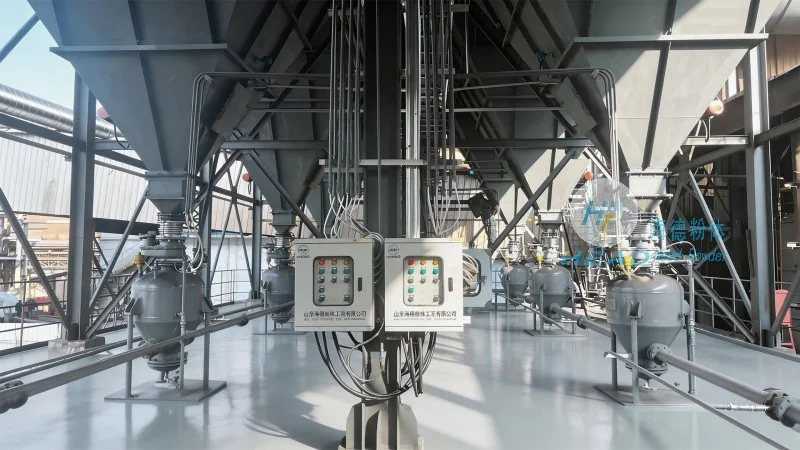
1. Positive-Pressure Systems: In these systems, air is supplied under pressure to push the material through the pipeline. This type of system is suitable for short to medium distances and is commonly used when the material is non-abrasive or when the system needs to operate in a clean environment. Positive-pressure systems are often preferred for applications where the material needs to be delivered to multiple points or where the system is integrated with other processes.

2. Negative-Pressure (Vacuum) Systems: These systems use a vacuum to draw the material into the pipeline. They are ideal for long-distance transport or when the material needs to be collected from multiple sources. Negative-pressure systems are particularly useful when the material is dusty or when the system needs to operate in an enclosed environment to prevent dust dispersion.
3. Combined Systems: Some applications may require a combination of positive and negative pressure to achieve optimal performance. For example, a system might use positive pressure to move the material from a storage silo to a processing unit and then switch to negative pressure to transport the material to a final destination. Combined systems offer flexibility and can be tailored to meet specific operational requirements.