

Efficient and Clean Solution for Paddy Husk Transport: A Detailed Explanation of Pneumatic Conveying
For agricultural processing facilities, efficiently handling paddy husk while maintaining a clean and hygienic environment is a critical challenge. Traditional methods like belt conveyors or manual handling often lead to dust, contamination, and operational inefficiencies. This article explores the benefits of pneumatic conveying technology as a superior solution for transporting paddy husk, highlighting its advantages in terms of efficiency, cleanliness, and overall process optimization.

About HeadPowder Engineering
HeadPowder, or Shandong HeadPowder Engineering Co., Ltd., is a leading provider of advanced material handling solutions tailored for the agricultural and food processing industries. With a focus on innovation and customer-centric design, the company specializes in developing customized pneumatic conveying systems that address the unique challenges of paddy husk transport. HeadPowder’s expertise lies in integrating robust engineering with practical application, ensuring that their solutions meet the highest standards of performance and reliability.
How Pneumatic Conveying Works
Pneumatic conveying uses compressed air to transport bulk materials like paddy husk through a sealed system of pipes. The process involves creating a pressure differential that propels the material from the source to the destination. There are two primary types of pneumatic conveying: pressure and vacuum systems. Pressure systems use positive pressure to push material through the pipeline, while vacuum systems use negative pressure to pull material. For paddy husk, a pressure system is often preferred due to its ability to handle abrasive materials and maintain consistent flow rates.
Advantages of Pneumatic Conveying for Paddy Husk
One of the most significant benefits of pneumatic conveying is its ability to maintain a clean and dust-free environment. Unlike traditional methods that generate airborne particles, pneumatic systems keep the material contained within a sealed pipeline, reducing the risk of contamination and improving air quality in the processing facility. This is particularly important for paddy husk, which can be a source of fine dust that may affect product quality or pose health hazards. Additionally, pneumatic conveying offers high efficiency in terms of material transport speed and throughput. The technology allows for continuous, uninterrupted flow, minimizing downtime and maximizing production capacity. HeadPowder’s pneumatic conveying systems are designed to handle high volumes of paddy husk while maintaining optimal performance, ensuring that processing plants can operate at peak efficiency.
Key Components of a Pneumatic Conveying System
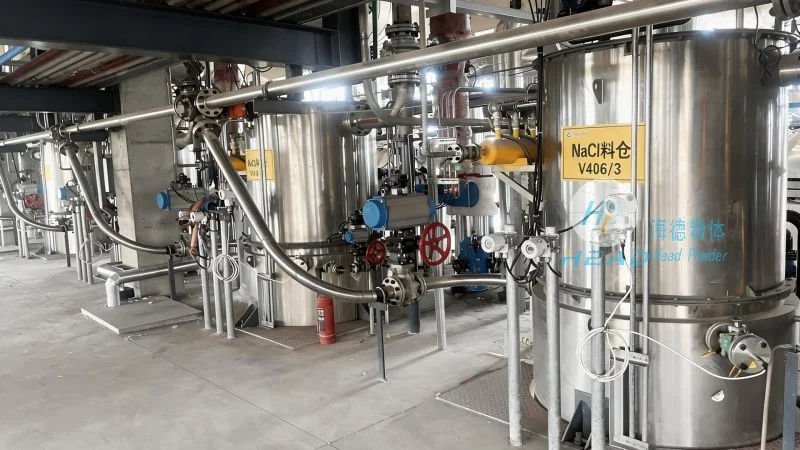
A pneumatic conveying system for paddy husk typically includes several key components: a material feed hopper, a rotary airlock valve, a conveying pipeline, a receiver hopper, and a dust collector. The feed hopper stores the paddy husk and feeds it into the system at a controlled rate. The rotary airlock valve acts as a seal between the hopper and the pipeline, preventing air leakage and ensuring smooth material flow. The conveying pipeline transports the material from the source to the destination, while the receiver hopper collects the material at the end of the process. The dust collector removes any fine particles that may escape from the system, maintaining a clean environment. HeadPowder designs these components to work in harmony, ensuring that each part contributes to the overall efficiency and reliability of the system. Customization is a key aspect of HeadPowder’s approach, as each processing facility has unique requirements. The company works closely with clients to design systems that fit their specific space, material characteristics, and operational needs.

Real-World Applications and Performance
In practice, pneumatic conveying systems from HeadPowder have demonstrated significant improvements in paddy husk transport efficiency. By eliminating the need for manual handling and reducing the risk of contamination, these systems help processing plants achieve higher throughput and lower operational costs. For example, a rice mill in Shandong, China, implemented a HeadPowder pneumatic conveying system and reported a 30% increase in material transport speed compared to traditional methods. The system also reduced dust emissions by 80%, improving workplace safety and air quality. These results highlight the tangible benefits of adopting pneumatic conveying technology for paddy husk transport. HeadPowder’s commitment to quality and customer satisfaction ensures that their systems are not only efficient but also durable and low-maintenance, providing long-term value to their clients.
Conclusion: The Clean and Efficient Choice for Paddy Husk Transport
For agricultural processing facilities seeking to enhance the efficiency and cleanliness of their paddy husk transport operations, pneumatic conveying technology offers a superior solution. HeadPowder Engineering, with its expertise in material handling systems, provides customized pneumatic conveying solutions that address the unique challenges of paddy husk processing. By leveraging advanced engineering and customer-centric design, HeadPowder ensures that their systems deliver optimal performance, reliability, and cost-effectiveness. As the demand for efficient and clean processing solutions continues to grow, pneumatic conveying remains a key technology for the agricultural industry. HeadPowder’s commitment to innovation and quality positions them as a trusted partner for businesses looking to improve their paddy husk transport processes and achieve greater operational success.