

Choosing Between Positive Pressure and Negative Pressure for White Carbon Black Powder Pneumatic Con
When it comes to the pneumatic conveying of white carbon black powder, selecting the right system is crucial for efficiency, safety, and cost-effectiveness. The two primary methods are positive pressure conveying and negative pressure conveying. Understanding the differences and applications of each is essential for making an informed decision. This article will explore the key aspects of both systems, helping you determine which is more suitable for your specific needs.
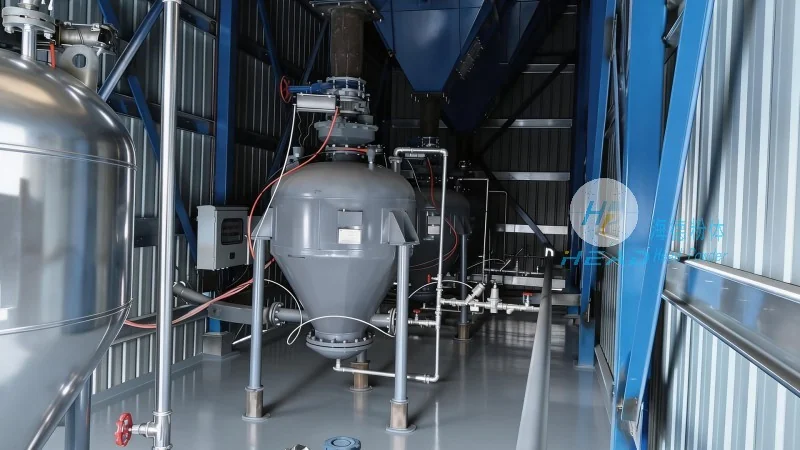
Introduction to Pneumatic Conveying Systems
Pneumatic conveying is a method used to transport bulk materials like white carbon black powder through a pipeline using air or gas as the conveying medium. It offers advantages such as reduced dust, improved safety, and the ability to transport materials over long distances without the need for mechanical components like belts or buckets. However, the choice between positive and negative pressure systems depends on various factors including material properties, system layout, and operational requirements.
Understanding Positive Pressure Conveying
Positive pressure conveying operates by blowing air or gas into the material stream, creating a pressure higher than the ambient air pressure. This method pushes the material through the pipeline. The system typically includes a blower or compressor at the material source, which generates the necessary pressure to move the powder. This approach is often preferred for short to medium-distance conveying and when the material is sensitive to air exposure or moisture.
Key Characteristics of Positive Pressure Systems
Positive pressure systems are generally more suitable for abrasive or corrosive materials because the high-pressure air can help break up agglomerates and maintain consistent flow. They are also effective for conveying materials that are prone to caking or sticking, as the force of the air helps keep the material in suspension. Additionally, these systems are easier to install and maintain, as they do not require complex vacuum equipment.

Applications of Positive Pressure Conveying
Positive pressure conveying is commonly used in industries such as pharmaceuticals, food processing, and chemical manufacturing where the material needs to be handled gently and hygienically. For example, in the production of white carbon black for rubber and plastic applications, positive pressure systems can ensure that the powder is transported without degradation, maintaining its quality and performance.
Understanding Negative Pressure Conveying
Negative pressure conveying, also known as vacuum conveying, operates by creating a vacuum in the pipeline, which draws the material from the source into the system. The material is then transported to the destination where the pressure is restored. This method is often used for longer distances or when the material needs to be collected from multiple points.
Key Characteristics of Negative Pressure Systems
Negative pressure systems are ideal for conveying materials that are light and fine, as the vacuum helps maintain the material in suspension. They are also suitable for applications where the material source is at a higher elevation than the destination, as the vacuum can pull the material up. However, these systems require more complex equipment, including vacuum pumps and filters, which can increase maintenance costs.
Applications of Negative Pressure Conveying
Negative pressure conveying is commonly used in industries such as mining, agriculture, and waste management where large volumes of material need to be transported over long distances. For instance, in the processing of white carbon black from raw materials, negative pressure systems can efficiently collect and transport the powder from storage silos to processing units.

Distinguishing Between Positive and Negative Pressure Conveying
Choosing between positive and negative pressure systems depends on several factors. The first consideration is the distance and layout of the conveying system. Short to medium distances are typically better suited for positive pressure, while longer distances may require negative pressure. The second factor is the material properties, including particle size, density, and moisture content. Materials that are abrasive or prone to caking may benefit from positive pressure, while light and fine materials may work better with negative pressure. The third factor is the operational environment, including the need for dust control and safety measures. Positive pressure systems are generally safer as they do not create a vacuum that could draw in external contaminants, while negative pressure systems require proper sealing to prevent dust leakage.
Factors to Consider When Choosing a System
When deciding between positive and negative pressure conveying for white carbon black powder, several factors must be evaluated. First, the cost of equipment and installation. Positive pressure systems are often more cost-effective for shorter distances, while negative pressure systems may be more expensive due to the need for vacuum pumps and filters. Second, the maintenance requirements. Positive pressure systems are generally easier to maintain, as they do not require complex vacuum equipment. Third, the material handling requirements. If the material is sensitive to air exposure or moisture, positive pressure may be preferred. Fourth, the safety considerations. Positive pressure systems are safer as they do not create a vacuum that could draw in external contaminants, reducing the risk of dust explosions or inhalation hazards.
Conclusion
Choosing between positive pressure and negative pressure for white carbon black powder pneumatic conveying requires careful consideration of the system's requirements, material properties, and operational environment. Positive pressure systems are suitable for short to medium distances and materials that are abrasive or prone to caking, while negative pressure systems are ideal for longer distances and light, fine materials. By understanding the key characteristics and applications of each system, you can make an informed decision that ensures efficient, safe, and cost-effective material transport. For more information on pneumatic conveying systems for white carbon black powder, contact Shandong HeadPowder Engineering Co., Ltd., a leading provider of engineering solutions for bulk material handling.