

What Methods Can Be Used for Pepper Powder Conveying?
Pepper powder, a staple spice in culinary applications, demands efficient and reliable conveying systems to facilitate its movement from storage to processing stages. The selection of an appropriate conveying method is influenced by several key factors, including the material's physical properties, the scale of operation, and the specific requirements of the production line. This article explores various methods for pepper powder conveying, offering insights into their applications and benefits.

Key Factors Influencing Conveying Method Selection
Before discussing specific techniques, it is essential to consider the factors that impact the choice of a conveying system. These factors include the moisture content of the pepper powder, which affects its flowability; the particle size distribution, as finer powders may require specialized handling; and environmental conditions such as temperature and humidity, which can influence material behavior. Additionally, the desired conveying capacity, the distance over which the powder must be transported, and the overall cost of the system are critical considerations. Understanding these elements helps in making an informed decision that aligns with operational efficiency and product quality.
Common Conveying Methods for Pepper Powder
Several methods are commonly employed for pepper powder conveying, each with distinct advantages and suitable applications. The primary approaches include pneumatic conveying, mechanical conveying, and gravity-based systems. Pneumatic conveying utilizes air pressure to transport the powder through a closed pipeline, making it ideal for fine, dry powders. Mechanical conveying systems, such as screw and belt conveyors, are suitable for bulk materials and offer high throughput. Gravity-based systems, like chutes and hoppers, rely on the natural flow of the powder and are ideal for short distances and low volumes.
Pneumatic Conveying Systems
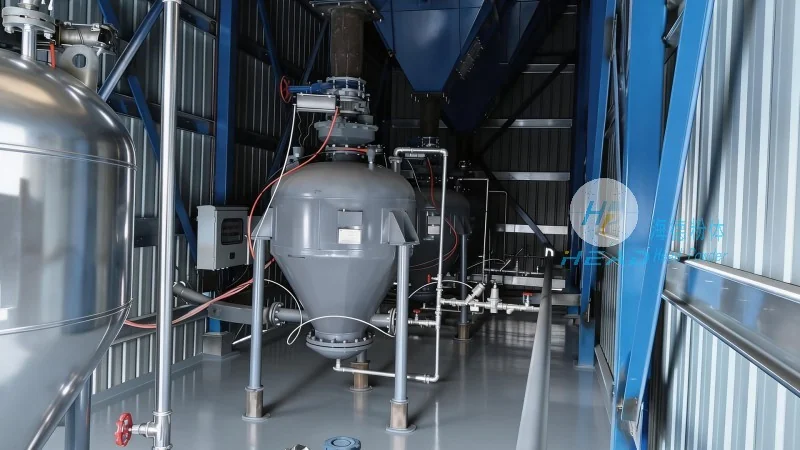
Pneumatic conveying is widely adopted for pepper powder due to its ability to handle fine, dry powders without mechanical contact. This method involves transporting the powder in a closed pipeline using compressed air. Two main types exist: pressure and vacuum systems. Pressure systems use compressed air to push the powder forward, while vacuum systems draw the powder into the system. For pepper powder, a pressure system is often preferred as it can handle longer distances and provides better flow control. The system typically includes a hopper, a feeder, a pipeline, and a receiver. The feeder ensures consistent powder flow into the pipeline, and the receiver collects the material at the end. Pneumatic conveying minimizes contamination and reduces dust accumulation, making it suitable for food-grade applications. Proper maintenance is required to prevent air leaks and ensure efficiency.
Mechanical Conveying Systems
Mechanical conveying systems are another viable option for pepper powder handling. These systems rely on mechanical components to move the material. Screw conveyors, or augers, are widely used for bulk materials. They consist of a rotating screw inside a trough, moving the powder forward. Screw conveyors are suitable for horizontal and inclined transport and can handle various particle sizes. For pepper powder, a screw conveyor with a smooth surface is recommended to avoid buildup and ensure smooth flow. Belt conveyors are another mechanical choice, where a belt transports the powder. They are ideal for longer horizontal distances and high volumes. However, regular cleaning is needed to prevent powder accumulation on the belt. Mechanical conveyors are generally more cost-effective than pneumatic systems and easier to install and maintain. They are suitable for short to medium distances and materials that can tolerate mechanical contact without degradation.

Gravity-Based Conveying Systems
Gravity-based systems utilize the natural flow of pepper powder to move it. These systems are simple and cost-effective, suitable for short distances. Chutes and hoppers are key components. A chute is a sloped channel that allows the powder to flow under gravity, while a hopper collects and releases the powder. The chute angle is critical, needing at least 45 degrees for smooth flow. Gravity systems are ideal for low-volume applications and short distances, such as from storage to processing. They are useful when material properties make mechanical or pneumatic systems unsuitable. However, they have limitations in distance and capacity, as flowability dictates performance.
Considerations for Choosing the Right Conveying System
When selecting a conveying system for pepper powder, several factors must be evaluated to ensure optimal performance. Material properties, like moisture content and particle size, are crucial. Fine powders may need pneumatic or mechanical systems with special designs to prevent clogging. The conveying distance is another factor; short distances may use gravity systems, while longer distances require pneumatic or mechanical systems. Desired throughput and product containment are also important. If the powder needs to be transported in a closed system to avoid dust, pneumatic conveying is best. Cost and maintenance should be considered: mechanical systems have lower initial costs but higher maintenance, while pneumatic systems have higher initial costs but lower maintenance. Finally, available space and existing infrastructure must be assessed. By carefully evaluating these factors, the most suitable conveying system can be selected, ensuring efficient operation and product quality.