

The Working Principle and Features of Fly Ash Material Conveying
Fly ash, a fine particulate byproduct of coal combustion, is a critical material in power generation and waste management. Efficient transportation of this material from the boiler to storage or disposal sites is essential for operational efficiency and environmental compliance. This article explores the fundamental principles governing fly ash material conveying and highlights the key characteristics that define effective conveying systems.

Introduction to Fly Ash Material Conveying
Fly ash, also known as pulverized fuel ash, is generated during the combustion of coal in thermal power plants. Its transportation requires specialized systems capable of handling fine particles, varying moisture content, and abrasive properties. Conveying systems must balance performance, reliability, and cost-effectiveness to meet the demands of industrial applications.
The Working Principle of Fly Ash Material Conveying
The core mechanism of fly ash material conveying involves mechanical or pneumatic methods to move the material through a designated path. Mechanical systems utilize rotational or linear motion to transport the material, while pneumatic systems rely on air pressure to propel the particles.
For mechanical conveying, screw conveyors are commonly used. These systems consist of a rotating screw inside a trough, which pushes the fly ash forward. The screw's flights lift and move the material, making it suitable for both horizontal and vertical transport. Belt conveyors are another option, where the fly ash is spread on a moving belt to transport it over longer distances. This method is effective for high-volume applications and can be integrated with other equipment like feeders or classifiers.
Bucket elevators are employed for vertical movement, where buckets attached to a chain or belt lift the fly ash to a higher level. As the buckets ascend, they discharge the material into a hopper at the top. This system is ideal for transferring fly ash from the boiler to storage silos.

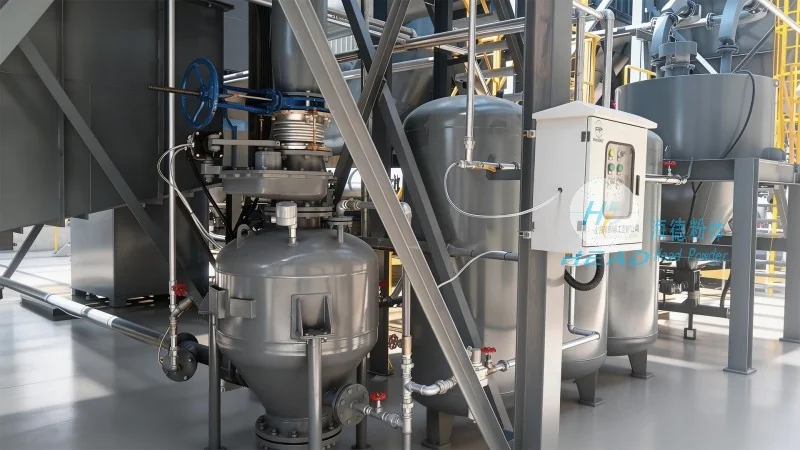
Pneumatic conveying systems operate on the principle of air movement. Positive pressure systems use blowers to force air and fly ash through a pipeline, while negative pressure systems employ vacuum pumps to draw the material into the pipeline. The choice between these systems depends on factors such as distance, material volume, and the need to minimize dust emissions.
Key Features of Effective Fly Ash Conveying Systems
Effective fly ash conveying systems exhibit several critical features that ensure optimal performance and reliability. These features include high efficiency, low maintenance, adaptability to varying material conditions, and robust dust control.
Firstly, efficiency is a primary consideration. Modern systems are designed to minimize energy consumption while maximizing material throughput. This is achieved through optimized components, such as efficient motors and aerodynamic pipeline designs, which reduce energy losses and enhance overall system performance.
Secondly, durability and low maintenance are essential for long-term operation. Fly ash can be abrasive and corrosive, especially when mixed with moisture, which can cause wear on conveyor parts. High-quality materials, like stainless steel or corrosion-resistant alloys, are used to extend service life and reduce maintenance intervals.
Thirdly, flexibility in handling varying material conditions is crucial. Fly ash properties can vary based on coal quality and combustion processes, affecting particle size, moisture, and density. Conveying systems must adapt to these variations to prevent blockages and maintain consistent flow. Adjustable speed controls, variable pitch screws, or variable air pressure settings enable this flexibility.
Fourthly, dust control is a critical safety and environmental feature. Fly ash is a fine powder that can create dust hazards. Effective systems incorporate sealing, dust collection, or moisture application to reduce dust generation. These measures protect personnel and comply with environmental regulations.
Fifthly, integration with downstream processes is a valuable feature. Fly ash is often used as a raw material in cement or concrete production. Conveying systems are designed to integrate with these processes, enabling seamless material transfer from the power plant to the processing facility. This integration enhances overall plant efficiency.
Conclusion
In summary, the working principle and features of fly ash material conveying are vital for optimizing industrial operations. Mechanical and pneumatic systems each offer unique advantages, and the selection depends on operational requirements like distance, material characteristics, and environmental considerations. Key features such as efficiency, durability, flexibility, dust control, and process integration are essential for reliable and cost-effective fly ash handling. By understanding these principles and features, industrial operators can improve material conveying processes and enhance overall plant performance.