

How to Choose the Right Pneumatic Conveying System for Your Zinc Oxide Suboxide Delivery Process?
When it comes to the efficient and reliable delivery of zinc oxide suboxide in industrial processes, selecting the appropriate pneumatic conveying system is a critical decision that can significantly impact operational efficiency, product quality, and overall cost-effectiveness. The choice of system depends on several key factors, including the material's properties, the required throughput, the distance of transport, and the specific application requirements. This article aims to guide you through the essential considerations and steps to ensure you select the most suitable pneumatic conveying system for your zinc oxide suboxide handling needs.

Understanding the Importance of Pneumatic Conveying for Zinc Oxide Suboxide
Zinc oxide suboxide is a fine powder with unique handling characteristics that require specialized equipment to transport safely and efficiently. Traditional methods like belt conveyors or bucket elevators may not be suitable due to the material's dustiness, reactivity, or tendency to agglomerate. Pneumatic conveying systems offer a non-contact, enclosed solution that minimizes product contamination, reduces dust emissions, and maintains product integrity throughout the transport process. This is particularly important for zinc oxide suboxide, which is often used in applications where purity and consistency are paramount, such as in pharmaceuticals, ceramics, or specialty chemicals.
Key Factors to Consider When Selecting a Pneumatic Conveying System
Before choosing a pneumatic conveying system for your zinc oxide suboxide delivery process, it is essential to evaluate several key factors. First, the material's physical properties, such as particle size, density, and flowability, will determine the most effective conveying method. For example, fine powders like zinc oxide suboxide may require a pressure or vacuum system depending on the distance and layout of the transport line. Second, the required throughput and flow rate must be matched with the system's capacity to ensure continuous operation without bottlenecks. Third, the distance and layout of the transport route will influence the system's design, including the number of transfer points, bends, and the type of ductwork needed. Additionally, the need for product containment and environmental compliance should be considered, as pneumatic systems can be designed to meet strict dust control and safety standards.

Types of Pneumatic Conveying Systems for Zinc Oxide Suboxide
There are primarily two types of pneumatic conveying systems used for handling fine powders like zinc oxide suboxide: pressure and vacuum systems. Pressure systems use compressed air to push the material through the conveying line, typically from a storage silo or hopper to a processing unit. These systems are ideal for short to medium distances and can handle higher material loads. Vacuum systems, on the other hand, use a vacuum pump to draw the material from the source to the destination, which is often more suitable for longer distances or when the material needs to be transported from multiple points to a central location. Both systems have their advantages and limitations, and the choice depends on the specific application and operational constraints.
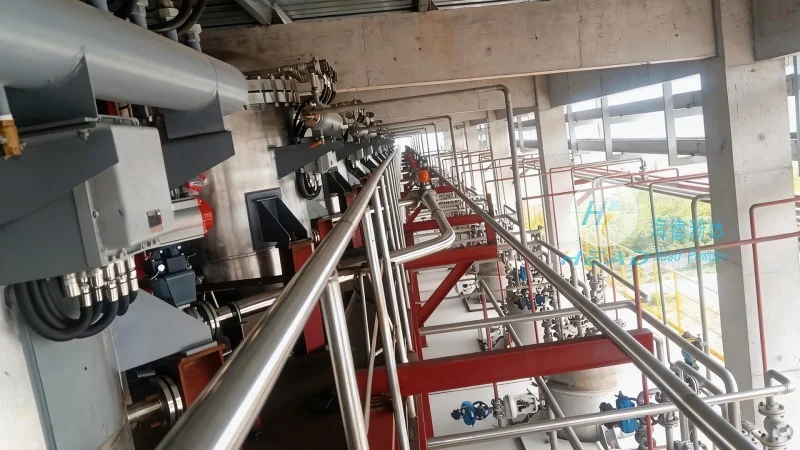
HeadPowder's Expertise in Pneumatic Conveying Solutions
Shandong HeadPowder Engineering Co., Ltd., commonly known as HeadPowder, is a leading provider of customized pneumatic conveying systems tailored to the unique needs of industries handling fine powders. With years of experience in the field, HeadPowder specializes in designing and manufacturing systems that ensure efficient, safe, and reliable transport of zinc oxide suboxide and other similar materials. The company's team of engineers and technicians works closely with clients to assess their specific requirements, conduct feasibility studies, and develop tailored solutions that meet their operational and budgetary constraints. HeadPowder's systems are engineered to handle the challenges associated with zinc oxide suboxide, such as its fine particle size, tendency to create dust, and potential for agglomeration, ensuring optimal performance and product integrity.
Customization and Integration for Optimal Performance
One of the key advantages of choosing HeadPowder for your pneumatic conveying system is the ability to customize the solution to fit your specific process. HeadPowder offers a range of components and configurations, including rotary valves, feeders, filters, and control systems, that can be integrated into a comprehensive system. The company's engineers can design a system that optimizes the flow rate, pressure, and energy consumption to minimize operational costs while maximizing efficiency. Additionally, HeadPowder provides comprehensive support, including installation, commissioning, and maintenance services, to ensure the system operates at peak performance throughout its lifecycle. By working with HeadPowder, you can be confident that your zinc oxide suboxide delivery process will be handled with the highest level of expertise and reliability.