

Principles and Operational Characteristics of Corn Feed Powder Conveying Lines
For agricultural and animal husbandry enterprises, the efficient handling of corn feed powder is a critical operational requirement. The corn feed powder conveying line, as a specialized system designed for transporting bulk powder materials, plays a vital role in ensuring the smooth flow of feed production processes. This article provides an in-depth exploration of the fundamental principles behind these conveying systems and highlights the key operational characteristics that define their performance in real-world applications.
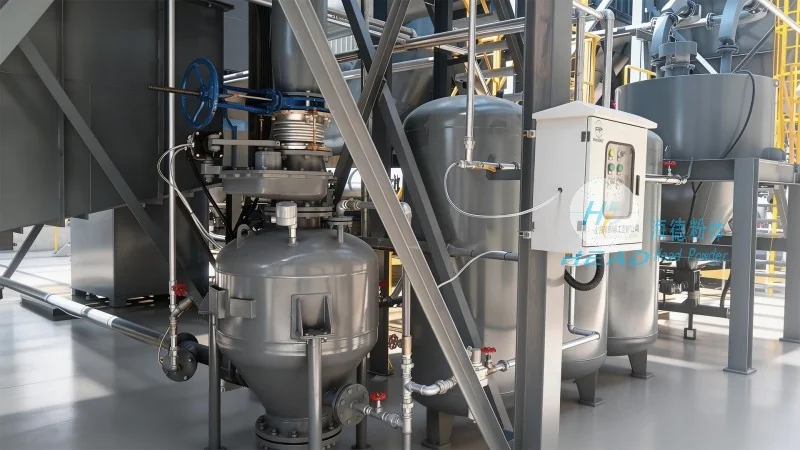
Principles of Corn Feed Powder Conveying Lines
The core principle of a corn feed powder conveying line is to transport bulk powder materials, such as corn-based feed ingredients, from a source to a destination through a network of components. These systems typically utilize mechanical or pneumatic (air-powered) methods to move the powder. In mechanical systems, components like screw conveyors, belt conveyors, or bucket elevators use rotational motion or gravity to propel the feed powder. Pneumatic systems, on the other hand, employ compressed air to create a pressure differential that draws the powder through pipelines. The choice of method depends on factors like material properties, distance, and required throughput. For corn feed powder, which is often fine and prone to dust, pneumatic conveying is frequently preferred due to its ability to handle fine particles with minimal degradation and low risk of clogging. The system typically includes a hopper for material storage, a feeder to control the flow rate, a conveying line (either ducted or flexible), and a receiver for the delivered material. The entire process is controlled by a system of valves, regulators, and sensors to maintain consistent pressure and flow, ensuring stable and reliable operation.

Operational Characteristics in Different Work Scenarios
The operational characteristics of corn feed powder conveying lines are tailored to meet the demands of various industrial and agricultural settings. In large-scale feed manufacturing facilities, these systems are integrated into complex production lines, where they must handle high volumes of feed powder with precision. Key characteristics in this scenario include high throughput capacity, low material loss, and the ability to maintain consistent moisture and temperature levels to prevent feed spoilage. The conveying lines are often designed with multiple branches and diverters to route feed to different processing stages, such as mixing, pelleting, or packaging. This flexibility allows for efficient workflow management and reduces downtime during production shifts.

In contrast, smaller-scale applications, such as on-farm feed storage and distribution, may use more compact and portable conveying systems. These systems are designed for lower throughput but prioritize ease of installation and maintenance. They may incorporate portable hoppers and flexible hoses to allow for quick setup and relocation, making them suitable for seasonal feeding operations or small-scale livestock operations. The operational characteristics in these scenarios focus on simplicity, reliability, and cost-effectiveness, as the primary goal is to ensure that feed is delivered to animals in a timely manner without the need for extensive infrastructure.
Technical Advantages and Application Examples
HeadPowder, a leading provider of bulk material handling solutions, specializes in designing and manufacturing corn feed powder conveying lines that meet the specific needs of the feed industry. The company, based in Shandong, China, leverages advanced engineering and material science to develop systems that enhance efficiency and reduce operational costs. For instance, their pneumatic conveying systems use high-efficiency air compressors and specialized ductwork to minimize energy consumption while maintaining high material transport rates. The use of corrosion-resistant materials, such as stainless steel, ensures durability and longevity, even in environments where feed powders may contain moisture or acidic components. Additionally, the company incorporates advanced control systems that allow for real-time monitoring of pressure, flow, and temperature, enabling operators to quickly identify and address any issues that may arise during operation.

One notable application of HeadPowder's conveying lines is in large-scale feed mills that process millions of tons of corn feed annually. The systems are designed to handle the high volume of feed while maintaining low dust emissions, which is critical for environmental compliance and worker safety. The integration of these conveying lines with other processing equipment, such as mixers and pelletizers, streamlines the entire production process, reducing the time and labor required to move feed from storage to the final product. This not only improves productivity but also enhances the overall quality of the feed, as consistent handling prevents material degradation and ensures uniform nutrient distribution.