

Sodium Hydroxide Pneumatic Conveying: A Material Handling Solution to Overcome Distance Limitations
Pneumatic conveying technology has revolutionized the way bulk materials, including caustic soda (sodium hydroxide), are transported across industrial facilities. Traditional methods often face limitations when it comes to long-distance or complex route requirements, but modern pneumatic systems offer a flexible and efficient alternative. This article explores the benefits and applications of sodium hydroxide pneumatic conveying, highlighting how it addresses the challenges of distance and material handling in industrial processes.

HeadPowder: A Leader in Advanced Material Handling Solutions
HeadPowder, a leading engineering company based in Shandong, China, specializes in designing and implementing advanced material handling solutions. With years of experience in the field, HeadPowder has developed state-of-the-art pneumatic conveying systems tailored to meet the unique needs of clients in various industries. The company's expertise lies in creating customized solutions that ensure safe, reliable, and efficient transport of sodium hydroxide, even over extended distances.
The Core of Pneumatic Conveying for Sodium Hydroxide
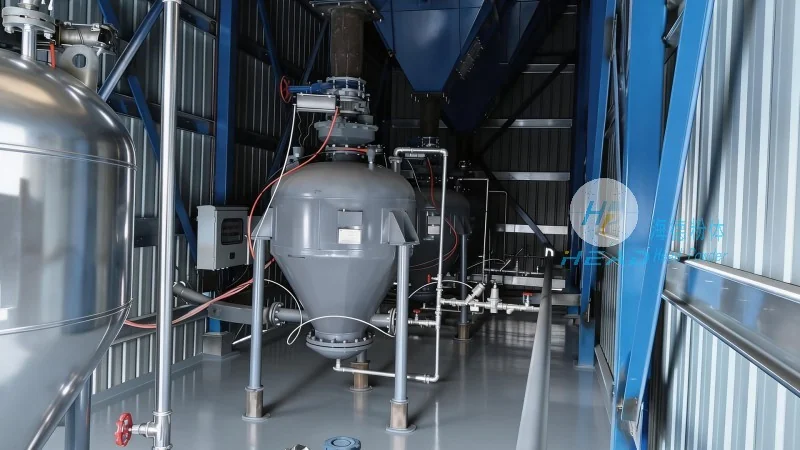
The core of a pneumatic conveying system for sodium hydroxide involves the use of air or gas to move the material through a pipeline. This method eliminates the need for mechanical components like conveyor belts or buckets, reducing maintenance costs and minimizing the risk of material contamination. The system typically consists of a hopper, a conveyor line, and a receiver, with the material being fed into the system and transported by the force of the air flow. This approach allows for seamless transfer of sodium hydroxide from storage to processing units, or between different parts of a facility, without the need for manual handling or intermediate storage.

Overcoming Distance Limitations with Pneumatic Systems
One of the key advantages of pneumatic conveying for sodium hydroxide is its ability to overcome distance limitations. Unlike traditional methods that may require multiple transfer points or specialized equipment for long distances, pneumatic systems can transport the material over several hundred meters or even kilometers with minimal loss of efficiency. This makes it an ideal solution for large-scale industrial operations where the material needs to be moved from a central storage area to multiple processing sites or for cross-facility transfers.
Safety and Environmental Considerations
Safety is a paramount concern when handling caustic soda, and pneumatic conveying systems address this by providing a closed-loop system that prevents exposure to the material and the environment. The enclosed pipeline ensures that sodium hydroxide remains contained during transport, reducing the risk of spills or leaks that could lead to environmental damage or worker exposure. Additionally, the system can be equipped with safety features such as pressure relief valves and monitoring systems to further enhance operational safety.
Efficiency and Energy Savings
Efficiency is another critical factor in the success of any material handling solution, and pneumatic conveying for sodium hydroxide delivers on this front. By using air as the primary transport medium, the system minimizes energy consumption compared to other methods, such as truck or rail transport. The continuous flow of material through the pipeline ensures a steady supply to processing units, reducing downtime and improving overall productivity. HeadPowder's systems are designed to optimize airflow and material flow rates, ensuring that the conveying process is both energy-efficient and reliable.
Flexibility and Integration with Existing Infrastructure
The flexibility of pneumatic conveying systems also allows for easy integration with existing industrial infrastructure. Whether it's retrofitting an existing facility or designing a new system from the ground up, HeadPowder can adapt its solutions to fit the client's specific requirements. The company's engineers work closely with clients to understand their operational needs, material characteristics, and distance requirements, ensuring that the final system is tailored to deliver optimal performance.
Conclusion: The Future of Sodium Hydroxide Transport
In conclusion, sodium hydroxide pneumatic conveying offers a robust and efficient solution for overcoming distance limitations in material handling. With its ability to transport the material safely, reliably, and over extended distances, this technology has become a preferred choice for many industrial applications. HeadPowder, with its expertise and commitment to quality, continues to provide cutting-edge pneumatic conveying systems that meet the evolving needs of the industry, ensuring that clients can achieve their material handling goals with confidence.