

Operation Process and Working Principle of Coal and Stone Powder Material Conveying Line
Shandong HeadPowder Engineering Co., Ltd., based in Shandong, China, specializes in the design, manufacturing, and installation of advanced material handling systems. The company focuses on providing efficient and reliable solutions for bulk material transport, particularly in coal and mining sectors. This article explores the operation process and working principle of a coal and stone powder material conveying line, detailing technical aspects and operational efficiency.
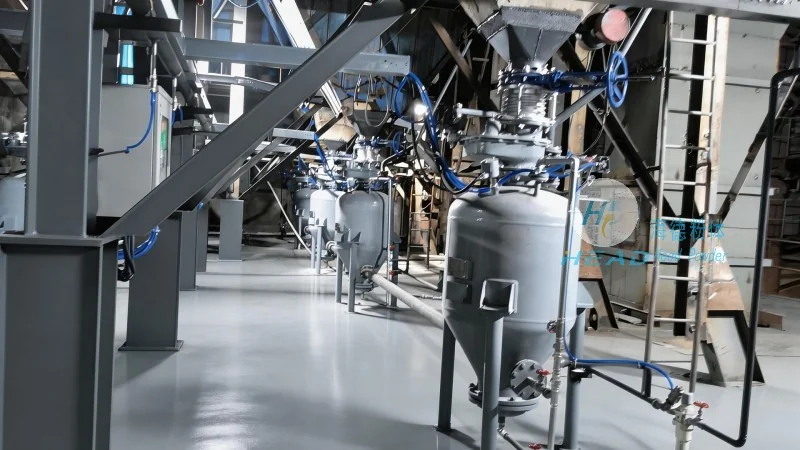
Introduction to Coal and Stone Powder Material Conveying Lines
A coal and stone powder material conveying line is a critical industrial component for transporting bulk materials like coal, stone powder, and other fine/coarse powders. These systems are engineered to handle materials with high efficiency, minimizing loss and ensuring consistent flow. The line typically integrates feeders, conveyors, control systems, and safety mechanisms to achieve smooth, continuous material transport.
Key Components of the Conveying Line
The effectiveness of a coal and stone powder material conveying line relies on the integration of essential components. Feeders uniformly distribute material into the system, preventing blockages and ensuring steady flow. Conveyors—such as belt, screw, or pneumatic types—are selected based on material characteristics and transport needs. Control systems manage speed, direction, and operation, while safety features (sensors, emergency stops) ensure compliance with industrial standards and operational safety.

Operation Process of the Conveying Line
The operation process starts with material feeding, where the material is introduced via hoppers or feeders for controlled flow. The conveyor transports material through sections with elevation or horizontal changes. Monitoring devices track flow rate, pressure, and other parameters to maintain optimal performance. The system is automated, with control panels allowing operators to adjust settings and monitor status in real-time.
Working Principle of the Conveying Line
The working principle involves mechanical or pneumatic forces to move material along the path. For mechanical systems (e.g., belt conveyors), a moving belt carries material from inlet to outlet, with speed and tension controlled to prevent spillage or degradation. Pneumatic systems use air pressure to transport material through pipes, suspending it in air flow. Design considers material density, particle size, and moisture to select the optimal conveying method.

Advantages of the Conveying Line
Implementing a coal and stone powder material conveying line offers several benefits. It enhances material transport efficiency, reducing labor costs and increasing production throughput. It minimizes loss and contamination, preserving product quality. Automated control systems improve safety and reduce accident risks. Modular design enables easy maintenance and scalability, adapting to changing production needs. Consistent performance contributes to operational stability and cost-effectiveness.

Application Scenarios
Coal and stone powder material conveying lines are widely used in industries like coal mining, power generation, and mineral processing. In coal mines, they transport coal from extraction sites to processing or storage areas. In power plants, they deliver coal to boilers for combustion, ensuring steady fuel supply. In mineral processing plants, they move stone powder and other materials for further processing (grinding, classification). The versatility makes it suitable for bulk material transport needs.
Conclusion
Shandong HeadPowder Engineering Co., Ltd. provides advanced coal and stone powder material conveying lines that combine efficiency, reliability, and safety. The operation process and working principle are designed to meet modern industrial demands, ensuring optimal performance and minimal downtime. By leveraging the company's expertise in material handling technology, industries can enhance production processes and achieve higher operational efficiency.