

Several Solutions for Alumina Pneumatic Conveying
Alumina, a critical raw material in the ceramics and refractory industries, requires efficient and reliable transportation methods to ensure consistent quality and minimize operational disruptions. Pneumatic conveying offers a versatile solution for moving alumina from storage to processing units, and various systems have been developed to address different operational needs and site conditions. This article explores several effective solutions for alumina pneumatic conveying, highlighting the technical considerations and practical applications.

Company Introduction: Shandong HeadPowder Engineering Co., Ltd.
Shandong HeadPowder Engineering Co., Ltd., a leading provider in the field of powder handling and material transportation, specializes in designing and implementing customized pneumatic conveying systems. With a focus on innovation and client-specific requirements, the company has extensive experience in handling abrasive and high-value materials like alumina. HeadPowder's engineering team leverages advanced technology and industry best practices to deliver solutions that enhance process efficiency, reduce maintenance costs, and ensure long-term reliability. The company's headquarters is located in Shandong, China, where it serves clients globally with tailored solutions for diverse industrial applications.
Overview of Pneumatic Conveying Systems for Alumina
Pneumatic conveying systems use air or gas to transport particulate materials through a pipeline. For alumina, which is often abrasive and has specific flow characteristics, the choice of system depends on factors such as material flow rate, distance, and the need for dust control. Two primary types of pneumatic conveying systems are commonly used: positive pressure (pressure) systems and negative pressure (vacuum) systems. Each has distinct advantages and is suitable for different scenarios.

Positive Pressure Pneumatic Conveying for Alumina
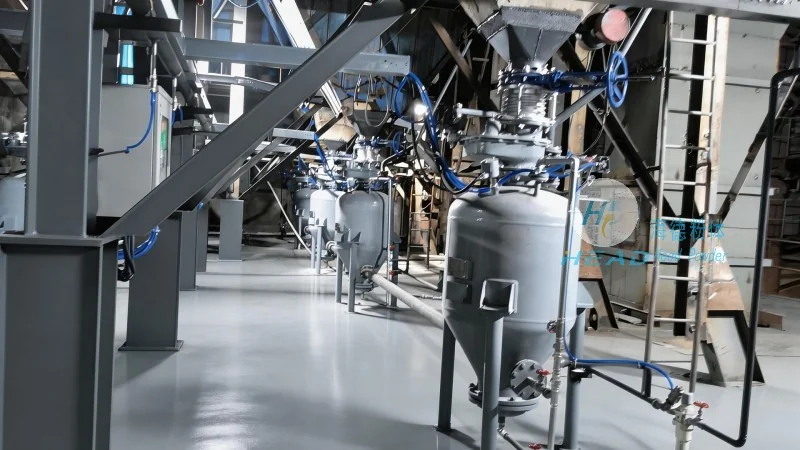
Positive pressure systems operate by blowing air or gas into the conveying line, creating a pressure higher than the ambient air pressure. This method is ideal for applications requiring high flow rates and long distances, as it can handle larger volumes of material efficiently. The system typically includes a blower, a hopper for material storage, and a pipeline network that transports the alumina from the source to the destination. Positive pressure systems are particularly effective when the material needs to be conveyed over long distances or when multiple destinations are involved. They also offer better control over the material flow rate, allowing for precise dosing and process control. However, these systems require robust equipment to handle the higher pressures and abrasive nature of alumina, which may increase initial investment and maintenance requirements. HeadPowder specializes in designing positive pressure systems that incorporate high-quality components, such as wear-resistant blower housings and durable pipeline materials, to ensure longevity and minimal downtime.
Negative Pressure Pneumatic Conveying for Alumina
Negative pressure systems, also known as vacuum systems, operate by creating a vacuum in the conveying line, drawing material from the source into the pipeline. This method is suitable for shorter distances and applications where dust containment is a priority, as the system pulls material rather than blowing it, reducing the risk of dust dispersion. Negative pressure systems are often preferred in environments where dust control is critical, such as in food processing or pharmaceutical industries, although they are also used for alumina handling when the material is sensitive to air exposure. The system includes a vacuum pump, a hopper, and a pipeline that transports the alumina from the source to the processing unit. One of the key advantages of negative pressure systems is their ability to handle materials with higher moisture content or those that are prone to clumping, as the vacuum helps maintain material flow. However, these systems may have lower flow rates compared to positive pressure systems and can be more complex to maintain, especially when dealing with abrasive materials like alumina. HeadPowder's engineering team designs negative pressure systems with advanced filtration and cleaning mechanisms to ensure consistent performance and minimize maintenance.
Mixing Pressure and Vacuum Systems for Alumina
In some cases, a combination of positive and negative pressure systems, known as mixed pressure systems, may be used to optimize the conveying process. This approach allows for flexibility in handling different material characteristics and operational requirements. For example, a mixed system might use a positive pressure section for the initial transport of alumina from a storage silo to a central processing area, followed by a negative pressure section to deliver the material to individual processing units. This configuration can improve overall efficiency by reducing energy consumption and minimizing material degradation. Mixed systems are particularly useful when the conveying distance is long but the final delivery points are close, as they can leverage the strengths of both positive and negative pressure methods. HeadPowder offers customized mixed pressure systems that are tailored to the specific needs of each client, ensuring optimal performance and cost-effectiveness.
Key Considerations for Alumina Pneumatic Conveying
When selecting a pneumatic conveying system for alumina, several factors must be carefully considered to ensure the system operates efficiently and reliably. First, the material's physical properties, such as particle size, density, and abrasiveness, play a crucial role in determining the appropriate system design. Alumina particles are typically fine and abrasive, which can cause wear on equipment components. Therefore, materials like stainless steel, high-chrome alloys, or specialized coatings are often used for components that come into direct contact with the material. Second, the conveying distance and flow rate requirements must be accurately assessed to choose the right system type and equipment size. Overdesigning or underdesigning the system can lead to inefficiencies or equipment failure. Third, dust control is a critical consideration, as alumina dust can be hazardous to health and cause environmental issues. Proper filtration and ventilation systems are essential to maintain a safe working environment and comply with regulatory standards. Fourth, energy consumption and operational costs should be evaluated, as pneumatic conveying systems can be energy-intensive. HeadPowder provides comprehensive consultation services to help clients assess these factors and select the most suitable system for their specific needs.
Conclusion
Alumina pneumatic conveying systems offer efficient and reliable solutions for transporting this essential material in various industrial applications. Whether using positive pressure, negative pressure, or mixed systems, the choice depends on the specific operational requirements, material characteristics, and site conditions. Shandong HeadPowder Engineering Co., Ltd. specializes in designing and implementing customized pneumatic conveying systems that meet the unique needs of each client, ensuring optimal performance, durability, and cost-effectiveness. By leveraging advanced technology and industry expertise, HeadPowder helps clients enhance their production processes and maintain consistent quality in the handling of alumina. With its headquarters in Shandong, China, the company serves clients globally, providing tailored solutions that address the challenges of alumina transportation and contribute to the success of industrial operations.