

Several Solutions for the Pneumatic Conveying of Quartz Sand Powder
When it comes to the efficient and reliable transport of quartz sand powder, selecting the right pneumatic conveying system is crucial for industrial operations. The choice of system can significantly impact process efficiency, material handling costs, and overall system longevity. This article explores several effective solutions for pneumatic conveying of quartz sand powder, highlighting key considerations and practical applications.

Understanding Pneumatic Conveying Systems
Pneumatic conveying systems use air or gas to transport bulk materials like quartz sand powder through a pipeline network. These systems are widely used in industries such as mining, construction, and manufacturing due to their ability to handle fine powders with minimal dust generation and contamination. The primary goal of a pneumatic conveying system is to move material from a source to a destination while maintaining product integrity and operational efficiency.
Key Factors in Selecting a Conveying Solution
Before implementing a pneumatic conveying system for quartz sand powder, several factors must be considered. These include the material's properties—such as particle size, moisture content, and flowability—the required conveying distance, and the desired system capacity. Additionally, the system's compatibility with existing infrastructure, maintenance requirements, and cost-effectiveness are critical in making an informed decision.
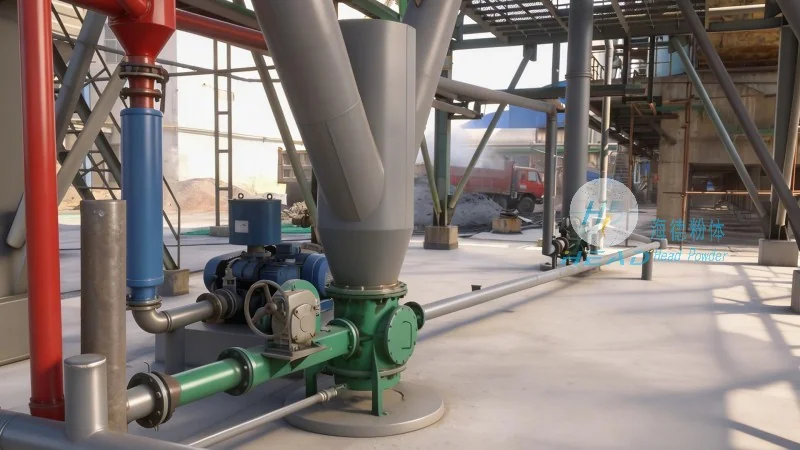
Solution 1: Dilute Phase Pneumatic Conveying
Dilute phase pneumatic conveying is a common method for transporting quartz sand powder over moderate distances. This system operates by injecting air at high velocity into the material, creating a dilute mixture that flows through the pipeline. The primary advantage of this approach is its ability to handle long distances with relatively low pressure drops. However, it may require larger air volumes and higher energy consumption compared to other methods. The system typically consists of a blower, a feed hopper, and a discharge point, with the material suspended in the air stream throughout the conveying process.
Solution 2: Dense Phase Pneumatic Conveying
Dense phase pneumatic conveying is ideal for transporting quartz sand powder over longer distances or when the material is sensitive to high velocities. This method involves operating the system at lower air velocities, which results in a denser material-air mixture. The material is conveyed in a more compact form, reducing the risk of particle degradation and minimizing wear on the system components. Dense phase systems often use pulse-jet or rotary valves to control the material flow, ensuring a more controlled and efficient transport. This solution is particularly suitable for applications where product quality and system durability are paramount.

Solution 3: Hybrid Pneumatic Conveying Systems
Hybrid pneumatic conveying systems combine elements of both dilute and dense phase methods to optimize performance for specific applications. These systems may use a combination of high and low air velocities, or integrate multiple conveying sections to achieve the desired transport characteristics. For instance, a hybrid system might use a dilute phase for the initial transport segment and then transition to a dense phase for the final delivery. This approach allows for greater flexibility in handling varying material properties and conveying distances. The hybrid design can also reduce energy consumption compared to using a single-phase system exclusively, making it a cost-effective solution for many industrial needs.
Implementation Considerations and Best Practices
When implementing a pneumatic conveying system for quartz sand powder, several best practices should be followed to ensure optimal performance and longevity. Proper material preparation, such as drying and sieving, is essential to maintain consistent flow characteristics. Regular maintenance of system components, including blowers, filters, and pipeline systems, is crucial to prevent downtime and ensure efficient operation. Additionally, monitoring system parameters like pressure, air flow, and material flow rates can help identify potential issues early and allow for timely adjustments.