

Principle and Working Scene Characteristics of Wood Dust Powder Pneumatic Conveying Lines
Wood dust and powder pneumatic conveying lines are critical systems in industries focused on wood processing and related material handling. These systems utilize air as the primary transport medium to move fine powders and dust, offering an efficient and flexible solution for material transport. The technology behind these lines integrates principles of fluid dynamics and mechanical engineering to ensure reliable and safe material movement.

Company Profile: Shandong HeadPowder Engineering Co., Ltd.
HeadPowder, a professional manufacturer of wood dust pneumatic conveying systems, is a leading enterprise based in Shandong, China. With extensive experience in the field, HeadPowder specializes in designing, manufacturing, and supplying high-quality pneumatic conveying equipment tailored to the specific needs of wood processing industries. The company's commitment to innovation and quality has established it as a trusted partner for businesses seeking efficient material handling solutions.
The Principle of Pneumatic Conveying for Wood Dust
Pneumatic conveying operates on the principle of transporting solid particles suspended in a moving air stream. For wood dust, the system typically employs a combination of positive and negative pressure or vacuum to move material from the source to the destination. The process involves key components such as a dust collector, a conveyor line, and a control system. The air flow is generated by a blower or fan, creating the necessary pressure differential to lift and transport wood dust particles. This method eliminates mechanical components like belts or buckets, reducing maintenance and enhancing operational efficiency.

Working Scene Characteristics of Wood Dust Pneumatic Conveying Lines
The working scene characteristics of wood dust pneumatic conveying lines are optimized for wood processing environments. These systems are designed to handle fine, abrasive, and potentially hazardous wood dust, ensuring safe and efficient material transport. Key characteristics include:
- High Efficiency and Flexibility: The ability to transport wood dust over long distances with minimal loss and high throughput. The system can be easily adjusted to accommodate varying material volumes and processing requirements.
- Low Maintenance and Durability: Using air as the transport medium reduces wear and tear on components, leading to lower maintenance costs and longer equipment lifespan. The materials used in the construction of the conveying lines are resistant to corrosion and abrasion from wood dust.
- Environmental Safety: Pneumatic conveying systems help control dust emissions, reducing fire hazards and improving workplace air quality. The enclosed design prevents dust from spreading into the environment.
- Adaptability to Different Applications: These lines can be integrated into various wood processing workflows, such as from sawdust collection to wood flour production, and from material transport to storage. The flexibility allows for seamless integration with existing production lines.
Typical Applications and Industry Scenarios
Wood dust pneumatic conveying lines are widely used in several industry scenarios, including:
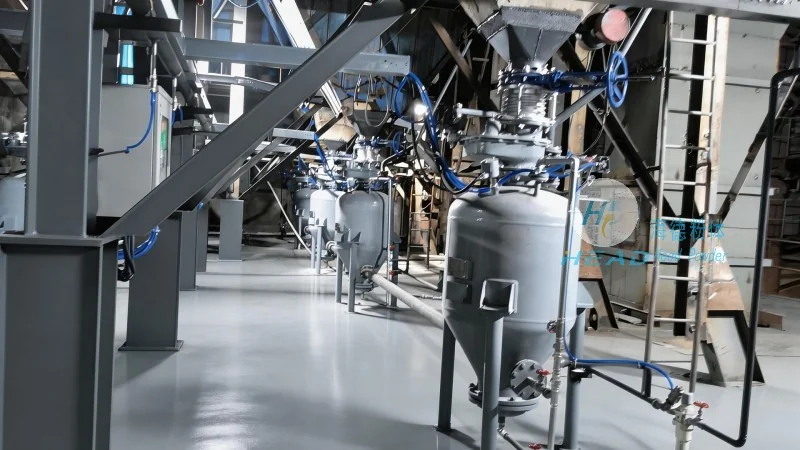
- Wood Processing Plants: In sawmills and lumber mills, the system efficiently collects and transports sawdust from cutting and shaping operations to storage or further processing units.
- Wood Flour and Pellet Production: For the production of wood flour and pellets, the pneumatic conveying system ensures consistent and high-quality material transport from grinding and drying stages to packaging or storage areas.
- Wood-Based Panel Manufacturing: In the production of particle boards, MDF, and other composite panels, the system handles wood chips and dust, facilitating material flow between mixing, pressing, and finishing stages.
- Industrial Dust Collection: The system can be integrated with dust collection systems to manage airborne wood dust, improving workplace safety and compliance with environmental regulations.
Advantages and Benefits for Wood Processing Industries
Implementing wood dust pneumatic conveying lines offers several advantages to wood processing businesses. These include improved operational efficiency, reduced labor costs due to automated material handling, enhanced workplace safety by minimizing dust exposure, and compliance with environmental regulations. The systems are designed to handle the unique challenges of wood dust, such as its fine particle size and potential for fire hazards, making them a reliable choice for long-term material transport solutions.
Conclusion
Wood dust powder pneumatic conveying lines, as provided by Shandong HeadPowder Engineering Co., Ltd., represent a sophisticated and efficient solution for material handling in wood processing industries. By leveraging the principles of pneumatic conveying, these systems offer high performance, low maintenance, and environmental safety, making them an ideal choice for businesses seeking to optimize their production processes and enhance operational efficiency.