

Principle and Working Scene Characteristics of Sodium Silicate Powder Pneumatic Conveying Line
HeadPowder, a leading engineering company based in Shandong, China, specializes in the design and implementation of advanced pneumatic conveying systems for various industrial applications. This article focuses on the principle and working characteristics of a sodium silicate powder pneumatic conveying line, highlighting its technical foundation and practical applications in industrial settings.

Principle of Pneumatic Conveying for Sodium Silicate Powders
The core principle of pneumatic conveying involves the transportation of bulk solid materials, such as sodium silicate powders, using a pressurized air stream. In this system, the powder is introduced into a pipeline where it is suspended and carried by the air flow. The process relies on the balance between the air velocity and the powder's particle characteristics, ensuring efficient and reliable transport without the need for mechanical components like belts or buckets.
For sodium silicate powders, which are typically fine and cohesive, specialized conveying techniques are employed. The system may utilize positive pressure or negative pressure (or a combination) to move the material. Positive pressure systems, where air is forced through the pipeline, are common for long-distance or high-capacity applications, while negative pressure systems, where air is drawn through the line, are often used for short distances or where dust control is a priority. The design of the conveying line, including the choice of air velocity, pipeline diameter, and the use of bends, elbows, and other components, is critical to maintaining the integrity of the powder and preventing blockages or degradation.

Key Working Scene Characteristics
The working scene characteristics of a sodium silicate powder pneumatic conveying line are defined by several factors that influence its performance and suitability for different industrial environments. These include:
- Material Handling Efficiency: The system's ability to handle sodium silicate powders, which may have varying particle sizes and moisture content, is crucial. The design must account for the powder's flow properties, ensuring consistent and uninterrupted transport.
- Environmental Considerations: Pneumatic conveying systems are often preferred over traditional methods for their ability to minimize dust emissions and environmental impact. The use of sealed pipelines and proper filtration helps maintain air quality and comply with industrial regulations.
- Process Integration: The line is typically integrated into larger production processes, connecting storage silos, processing units, and packaging equipment. Its ability to seamlessly connect these components without material loss or contamination is essential for maintaining production efficiency.
- Maintenance and Reliability: The system's design and construction impact its long-term reliability and ease of maintenance. High-quality materials and robust components reduce downtime and operational costs, making it a cost-effective solution for industrial operations.
Applications and Industry Context
Sodium silicate powder pneumatic conveying lines are widely used in various industries where sodium silicate is a key raw material. These include the glass manufacturing industry, as sodium silicate is used as a flux in glass production; the construction industry, where it serves as a binder in cement and mortar; and the chemical industry, for applications in water treatment and as a component in various chemical formulations.
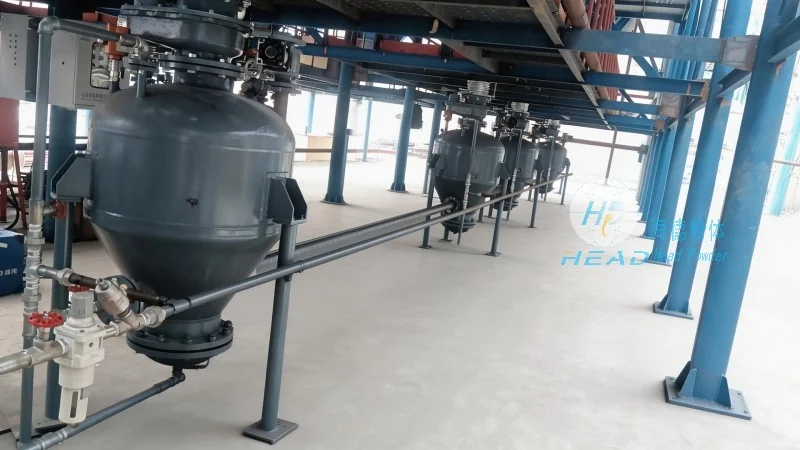
In each of these applications, the conveying system must meet specific requirements related to the material's properties and the production process. For example, in glass manufacturing, the system may need to transport large quantities of sodium silicate over long distances to the glass furnace, while in construction, it may be used to deliver the powder to mixing and batching equipment. The adaptability of the pneumatic conveying line to these diverse needs makes it a versatile solution for industrial material handling.
Conclusion
HeadPowder's expertise in designing and implementing sodium silicate powder pneumatic conveying lines ensures that industrial operations can achieve efficient, reliable, and environmentally friendly material transport. By understanding the principle and working characteristics of these systems, industries can optimize their processes, reduce costs, and enhance overall productivity. The company's commitment to quality and innovation positions it as a trusted partner for businesses seeking advanced material handling solutions.