

Design of a Calcium Carbonate Pneumatic Conveying System
HeadPowder, a leading engineering firm based in Shandong, China, specializes in the design and implementation of advanced pneumatic conveying systems for various industrial applications. This article focuses on the detailed design of a calcium carbonate pneumatic conveying system, highlighting the technical considerations, system components, and operational efficiency achieved through professional engineering expertise.
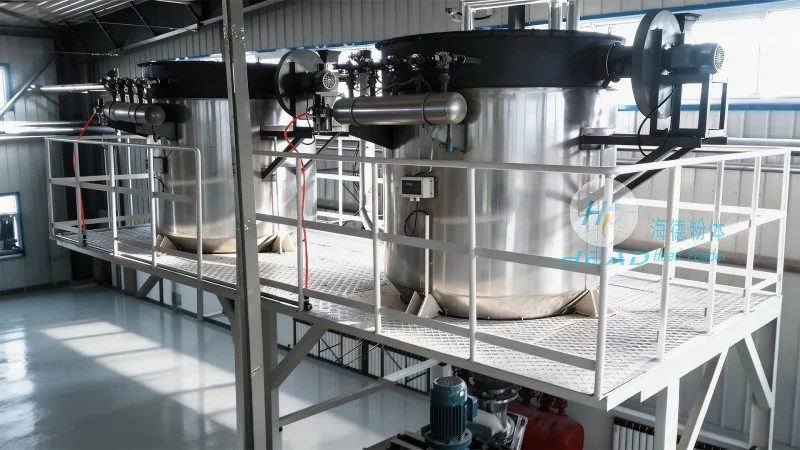
System Overview and Core Objectives
The calcium carbonate pneumatic conveying system designed by HeadPowder Engineering Co., Ltd. is engineered to efficiently transport bulk calcium carbonate powder from storage silos to processing units or packaging areas. The primary objectives of this system include ensuring high material transfer rates, maintaining product integrity, minimizing material degradation, and optimizing energy consumption. By leveraging advanced pneumatic conveying technology, the system addresses the unique challenges associated with handling fine, abrasive calcium carbonate powders, which are commonly used in industries such as paper, plastics, and coatings.
Key Design Considerations
When designing the calcium carbonate pneumatic conveying system, several critical factors were considered to ensure optimal performance and reliability. These factors include the material's physical properties, such as particle size distribution, moisture content, and abrasiveness, which directly impact system selection and component sizing. The system was designed to handle calcium carbonate with a particle size range typically between 1 to 200 microns, a moisture content below 0.5%, and a bulk density of approximately 1.5 g/cm³. Additionally, the system needed to accommodate high flow rates while maintaining low pressure differentials to minimize energy costs and prevent material degradation from excessive shear forces.

System Components and Technical Specifications
The calcium carbonate pneumatic conveying system consists of several key components, each carefully selected to meet the specific requirements of the application. The main components include a storage silo with a rotary feeder for controlled material discharge, a positive displacement blower or high-pressure air compressor to generate the necessary air flow, a conveying pipeline network with appropriate pipe diameters and bends, and a receiver or destination silo equipped with a dust collection system. The rotary feeder is designed to maintain a consistent material flow rate, preventing surges or blockages that could affect system performance. The blower is selected based on the required air volume and pressure, with options including centrifugal blowers for high-volume applications or positive displacement blowers for precise control. The pipeline system uses stainless steel or high-grade plastic pipes to prevent corrosion and material buildup, with appropriate bends and elbows to minimize pressure losses and maintain consistent flow velocities.
Material Handling and Product Integrity
Ensuring the integrity of calcium carbonate during transport is a paramount concern in the design of this system. The system incorporates several features to protect the material from degradation, including low-velocity conveying to reduce particle impact and abrasion, and the use of smooth, non-abrasive pipe surfaces. The rotary feeder and blower are equipped with wear-resistant components to minimize material wear and extend equipment lifespan. Additionally, the system includes a dust collection and filtration system to prevent material loss and maintain air quality. The receiver is designed with a venting system to prevent pressure buildup and ensure safe material discharge. These measures collectively ensure that the calcium carbonate remains in its original state, with minimal agglomeration or degradation, which is critical for maintaining product quality in downstream processes.

Energy Efficiency and Operational Performance
Energy efficiency is a key design consideration for the calcium carbonate pneumatic conveying system. The system is optimized to operate at lower pressure differentials, reducing energy consumption compared to traditional systems. The selection of the blower and pipeline dimensions is based on the principle of minimizing pressure losses while maintaining adequate flow velocities. The use of efficient rotary feeders and smooth pipelines further contributes to energy savings. Operational performance is monitored through real-time sensors and control systems, which adjust air flow and material feed rates to maintain optimal conditions. This dynamic control ensures that the system operates efficiently under varying load conditions, reducing downtime and maintenance costs. The result is a system that delivers high material transfer rates while minimizing energy costs, making it a cost-effective solution for industrial calcium carbonate handling.
Conclusion and Application Scope
The calcium carbonate pneumatic conveying system designed by HeadPowder Engineering Co., Ltd. exemplifies the company's expertise in industrial material handling solutions. By integrating advanced engineering principles, careful component selection, and operational optimization, the system provides reliable and efficient transport of calcium carbonate powder. This system is particularly suitable for applications requiring high throughput, such as in the paper and plastic industries, where consistent material quality and low energy consumption are essential. HeadPowder's commitment to quality and innovation ensures that their pneumatic conveying systems meet the stringent requirements of modern industrial operations, delivering long-term performance and value to clients.